Mathematics · University of South Florida
Divyesh
Vaghasiya.

Finite Fields. Coding Theory.
Cryptography & Secure Distributed Computation.

I am a PhD candidate in Mathematics at the University of South Florida, advised by Lukas Kölsch. I study algebraic and combinatorial structures that arise in reliable communication, Cryptographic Functions, and Secure Distributed Computation.

I expect to complete my PhD in May 2027 and welcome conversations about postdoctoral, research, and industry opportunities afterward.

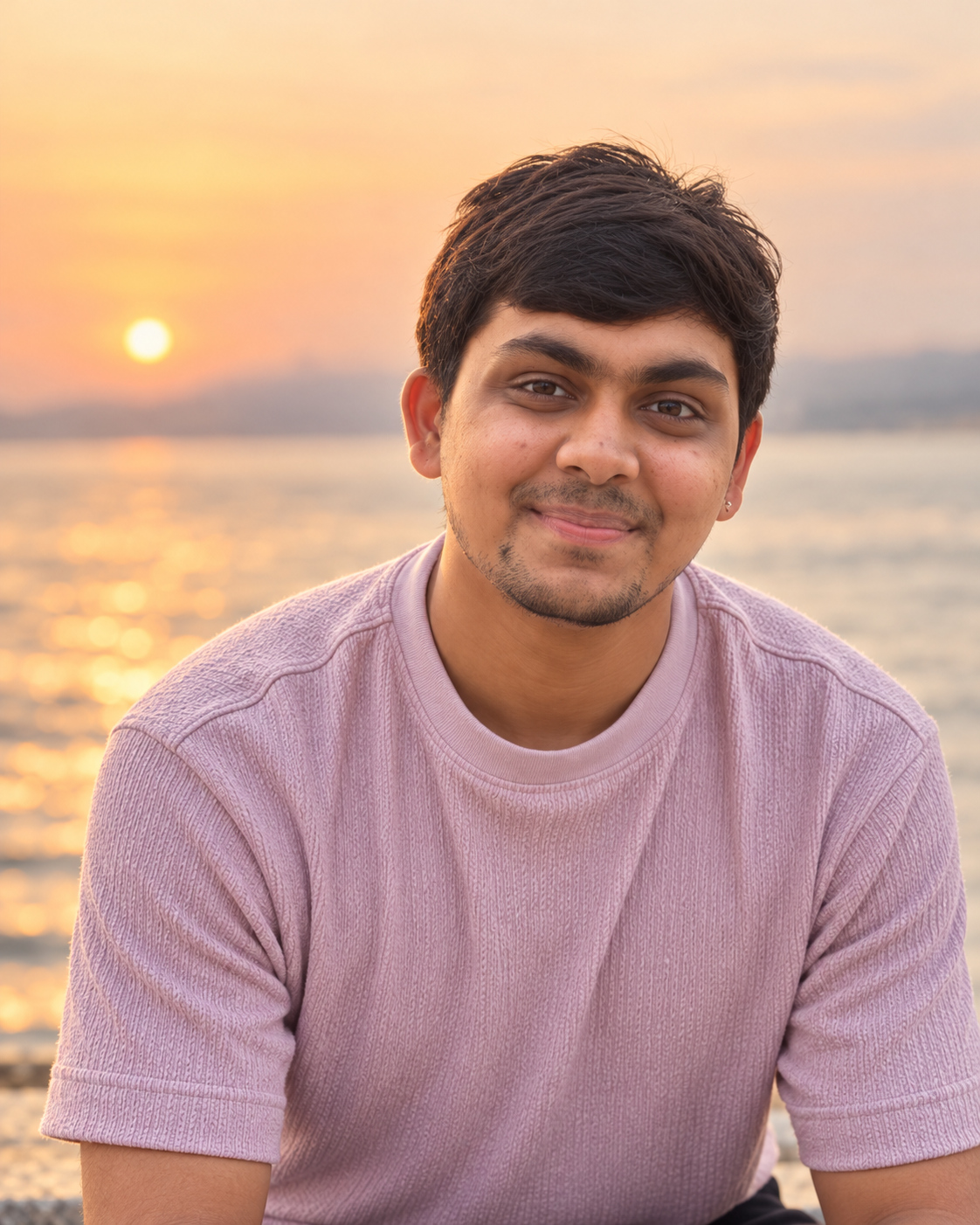
Portrait of Divyesh Vaghasiya
CurrentlyPhD candidate in Mathematics
Tampa, Florida

01 / Research

Algebra with a purpose.

Understanding finite structures, and what they make possible in Coding Theory and Cryptography.

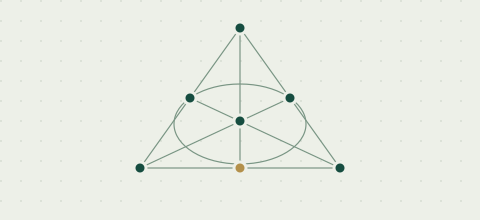
Schematic of points and intersecting lines representing finite geometry01   Finite Structures

Cryptographic Functions & Finite Geometry

I study Almost Perfect Non-linear (APN), Perfect Non-linear (PN), and Bent Functions over Finite Fields, together with their connections to Walsh Spectra, Vector Space Partitions, Blocking Sets, and Additive Combinatorics.

Read the Walsh Spectra paper
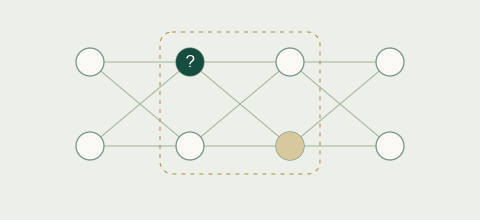
Schematic showing interconnected symbols and a highlighted local recovery group02   Reliable Information

Algebraic Coding Theory

My work includes “Good” Polynomials and Rational Functions for Locally Recoverable Codes, and algebraic calculations for Finite Semifields and associated Maximum Rank Distance Codes.

Read the Good Polynomials paper
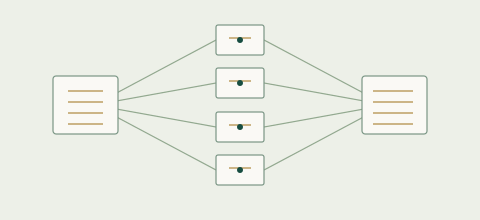
Schematic of encoded data sent to four workers and their responses combined03   Secure Distributed Computation

Secure Distributed Computation

How can workers help multiply Matrices while the inputs remain private? In joint work, we use Function Tables to study the encoding, privacy, and recovery conditions of Linear Schemes.

Read the Function Tables preprint

On my desk

Questions in progress

APN & PN Functions, Sidon Sets, and Sum-free Sets

Sidon and Sum-free Sets are collections of elements with special rules about addition. I study when Multiplicative Subgroups of Finite Fields have these properties, exploring how a structure built through multiplication behaves under addition. These questions connect with APN and PN Functions in Cryptography and with the properties of Cyclic Codes.

With Dr. Lukas Kölsch · Ongoing

“Good” Rational Functions for Locally Recoverable Codes

How can a missing piece of stored information be recovered by consulting only a few others? Locally Recoverable Codes address this through small recovery groups. I explore how Rational Functions over Finite Fields can be used to build such Codes, extending constructions based on Polynomials and studying how the choice of function shapes the recovery groups.

With Anuvrat Jaindungarwal · Manuscript draft completed

Homogeneity Degree of Bent Functions

Bent Functions have exceptionally strong nonlinearity, making them important objects in Cryptography. I study Homogeneous Bent Functions, whose Polynomial terms all have the same degree, and ask which degrees can occur. The project explores how this simple algebraic restriction shapes the possibilities for these Functions.

With Dr. Lukas Kölsch and collaborators · Manuscript in final reading by the authors

Autotopisms of Finite Semifields and Rank-Metric Codes

How can we compare Codes that arise from different algebraic constructions? I study the symmetries of Finite Semifields and their associated Maximum Rank Distance (MRD) Codes. Understanding which transformations preserve these structures offers a way to investigate their similarities, differences, and possible equivalences.

With Dr. Lukas Kölsch

Developing interests: Quantum Coding Theory and Quantum Distributed Computation, informed by the 2026 Gene Golub SIAM Summer School at Duke.

A small idea in Coding Theory

One missing symbol.
Two useful neighbours.

A Locally Recoverable Code lets us reconstruct a missing symbol from a small group of others. This simple illustration stores three values whose sum is zero modulo 5.

Lose any one value, and the other two tell you what it was. Real constructions ask how to combine this local repair with stronger global guarantees.

Explore the research behind the idea
Try a local repairArithmetic mod 5
a2
b4
c4

a + b + c ≡ 0 (mod 5)

For example: c = −(2 + 4) ≡ 4 (mod 5).

An illustrative three-symbol Parity Code, separate from the constructions in my papers.

02 / Publications

Papers & preprints.

Published articles and publicly available manuscripts. Expand a paper for a short overview.

2026Preprint

Function Tables for Secure Distributed Matrix Multiplication

Rafael G. L. D’Oliveira, Giulia Gaggero, Arturo Jaramillo Gil, Hiram H. López, Cecilia Martínez-Reyes, and Divyesh Vaghasiya

arXiv:2609.08154 · September 2026

What is this paper about?

How can several workers help multiply Matrices while keeping the original inputs private? This paper studies Linear Schemes that protect the data even when a limited number of workers share what they receive. Function Tables describe how encoded data and worker responses fit together, providing a way to compare constructions and understand how many workers are needed.

2026Journal article

On the Walsh Spectra of Quadratic APN Functions

Sophie Hannah Bénéteau, Nicolas Goluboff, Lukas Kölsch, and Divyesh Vaghasiya

IEEE Transactions on Information Theory 72(7), 5207–5216, 2026

What is this paper about?

This paper studies Quadratic APN Functions through their Walsh Spectra, which describe how their outputs relate to simple linear patterns. We connect these Spectra with arrangements of points and subspaces in Finite Geometry, providing a different way to explore the structure of these Functions.

2025Journal article

Good polynomials for locally recoverable codes: Classification results, asymptotics, and exact formulae

Mohamed O. Darwish, Anuvrat Jaindungarwal, Giacomo Micheli, Divyesh Vaghasiya, and Shujun Zhao

Journal of Algebra and Its Applications 24(13–14), article 2541017, 2025

What is this paper about?

Locally Recoverable Codes make it possible to reconstruct a missing piece of information using only a few other pieces. This paper studies “Good” Polynomials, which organize the small recovery groups behind these Codes. We explore which Polynomials have the required structure and how that structure influences the Codes that can be built.

Full bibliographic details also appear in my CV.

03 / Teaching & mentoring

Understanding
comes first.

“Teaching is one of the ways I most enjoy doing Mathematics.”

My central goal is for students to understand the ideas behind their work: what a definition means, why a method applies, and how mathematical ideas connect. I encourage questions and discussion, giving students room to express uncertainty and develop their reasoning.

Teaching also deepens my own understanding. Explaining an idea carefully, and listening to students’ questions, often reveals new ways of thinking about familiar Mathematics. I value this exchange and hope to share the curiosity and enjoyment that draw me to the subject.

Full teaching record
Fall 2026 · University of South Florida

Calculus I · MAC 2311

Instructor of record for a class of 55 students. I follow explanations with opportunities to work through new ideas, discuss reasoning, and ask questions while help is available.

2022–present

A broad teaching foundation

Teaching Assistant experience across Calculus, Linear Algebra, Differential Equations, Discrete Structures, and Abstract Algebra, alongside earlier teaching in India.

Summers 2025 & 2026

Undergraduate research mentoring

Mentoring in USF’s RTG-supported REUs: Quadratic APN Functions and Walsh Spectra in 2025, and Homogeneity Degree of Bent Functions in 2026.

04 / Talks & community

Sharing the Mathematics.

Conversations, presentations, and collaborative work.

JAN122027
Upcoming · invited special-session talk

Sidon and sum-free subgroups associated with APN and Planar exponents

Joint Mathematics Meetings · Chicago, Illinois
AMS Special Session on Cryptography and Related Fields, I

Scheduled

Blocking Sets and Vector Space Partitions Related to Quadratic Functions over 𝔽2n

AMS Spring Southeastern Sectional Meeting · Savannah, Georgia
Special Session on Algebraic Combinatorics

Good Polynomials and Rational Functions for Locally Recoverable Codes

AMS Spring Southeastern Sectional Meeting · Savannah, Georgia
Coding Theory and its Applications to Quantum Error-Correction and Cryptography

On the Walsh Spectra of Quadratic APN Functions

Indo-European Conference on Mathematics · Pune, India

Duke University · Summer 2026

Quantum Computing, together.

At the Gene Golub SIAM Summer School on Fault-tolerant Algorithms in Quantum Computing, our team Ready Player One received the Best Team Presentation Award for a project on Quantum Linear System Solvers.

CIMAT, Guanajuato · June 2026

From a workshop to a collaboration.

I participated in the Secure Distributed Matrix Multiplication working group at the Workshop on Applications of Commutative Algebra and Coding Theory. This collaboration led to our Function Tables preprint.

05 / Get in touch

Let’s exchange ideas.

I welcome conversations about Mathematics, research collaborations, and opportunities in academia and industry following my expected graduation in May 2027.

dvaghasiya@usf.edu divyeshvaghasiya00@gmail.com